A Comedy Double Bill for a Quiet Night In
Plan a comedy double bill for a quiet night in by pairing contrasting comic rhythms, so each selection has room to land and the evening stays lively.
You have settled on the sofa, made tea and opened a streaming menu, but two comedies that look equally appealing can make for a strangely flat evening if they move at the same pace. A comedy double bill for a quiet night in works better when the first selection sets one rhythm and the second deliberately changes it.
Think of the evening as a small programme, not a test of which film or special is funnier. A patient, low-key piece can leave space for a brisk, crowded one; a high-energy opener can make a quieter follow-up feel like a welcome exhale. The useful question is what kind of attention you want to give each work, and how you want that attention to shift.
What makes contrasting comic rhythms work?
Comic rhythm is the pattern of setup, pause, escalation and payoff. It is not simply whether performers speak quickly. A comedy may take its time through awkward silences, repeated routines or scenes that refuse to hurry; another may pile on entrances, callbacks, sharp edits and rapid changes of scene.
Pairing different rhythms gives each work a distinct job. The first can tune your ear to a particular comic texture, while the second changes the demand on your attention. This is why a double bill organised around pace can feel more coherent than two titles chosen only because they share a setting or subject.
Choose works whose difference is easy to notice but not so extreme that the second feels like an interruption. For instance, a gently unfolding character comedy followed by an ensemble piece with quick exchanges offers a clear shift. Two quiet dramas with occasional jokes may not provide enough change; two relentless, densely edited comedies may leave little room to reset.
Should you start with the slow burn or the sprint?
What suits a slow-burn opener?
Start with a slower comedy if you have enough attention to settle into its pauses and accumulating details. It suits a night when you want to watch expressions, small social discomforts or a recurring bit gradually change meaning.
Follow it with a livelier work if you want the evening to gather momentum rather than simply taper off. The contrast can make brisk dialogue or busy staging feel newly vivid after a patient first half.
When is a fast opener the better choice?
A fast first selection suits a restless mood, a late start or a room where people are still getting comfortable. It can establish a playful tone quickly, especially when its comedy comes from pace, collisions and frequent changes of direction.
For the second choice, move towards more breathing room: perhaps a stand-up set with longer stories or a comedy built around one awkward situation. After a dense opener, a less crowded rhythm can feel satisfying rather than subdued.
Can two short selections beat one long feature?
Yes, if you want a clean break between comic styles or have an uneven amount of attention to give the evening. A short set and a compact episode, for example, allow you to change rhythm without committing to a second full-length feature.
Two short works also make it easier to stop after the first if the household is tired. Choose the pair for a noticeable change in form as well as pace; swapping one fast sketch collection for another may leave the overall texture much the same.
What if the room cannot agree on a mood?
Let the first choice be the safer shared option, then make the second a deliberate contrast rather than a second vote for the same taste. A familiar, accessible opener can give a less familiar style a fair hearing once everyone is already watching together.
If people want different levels of concentration, favour works that remain enjoyable when someone misses a line. Dense wordplay can be a poor fit for a distracted room, while physical business or a clear recurring situation can still register from the kitchen doorway.
How do you choose a pair without matching the subject?
Compare the way each work handles time, not what it is about. Look at the description and, if useful, a short preview: does the comedy linger on discomfort, build through repetition, race through dialogue, or depend on quick visual changes? A trailer may exaggerate the pace, so treat it as a clue rather than a promise.
Then choose the order by asking which work needs a more attentive audience. Put the one that depends on quiet pauses, intricate callbacks or gradual character shifts first, while everyone is fresh. Save the piece that announces its comic world quickly for later, unless its opening is especially dependent on surprise.
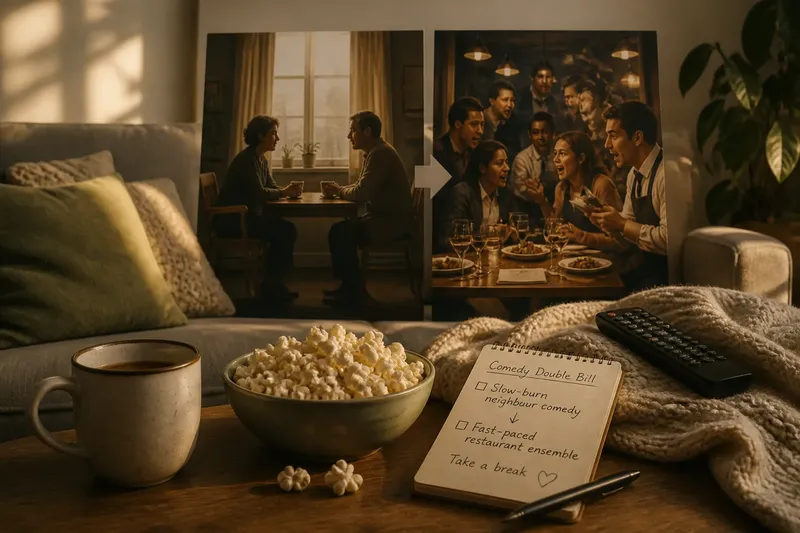
Say you have chosen a softly paced film about neighbours whose polite conversations keep going wrong, and a rapid ensemble comedy set in a restaurant. The starting point is a quiet evening with mixed energy: you watch the neighbour comedy first, then switch to the restaurant piece, expecting the quick entrances and overlapping exchanges to lift the pace without asking either work to share a subject.
To make the plan practical, write down the pair and the intended order before opening the menu. Check that both are available, that their running times fit the evening, and that subtitles or sound settings work for the room. Agree on a natural pause between them: make tea, stretch, or simply let the first ending sit for a moment.
Which pairing approach fits your evening?
Use this comparison to decide what the evening needs rather than searching for a perfect formula.
- Slow burn, then sprint: Choose this when you want to begin attentively and finish with energy. It suits a relaxed room that may become livelier once everyone has settled.
- Sprint, then slow burn: Choose this when people arrive distracted or tired and need an immediate lift. It suits viewers who would appreciate a calmer landing after quick, busy comedy.
- Long feature, then short piece: Choose this when the main event matters most but you still want a distinct final note. A brief set or episode can provide that change without stretching the night.
Not worth the effort: building an elaborate scorecard of comic devices or watching several previews until the surprise is gone. One clear contrast—patient against brisk, sparse against crowded, or story-led against sketch-based—is enough to guide a useful choice.
How can you keep the change of pace comfortable?
Give the second work a moment to establish its rhythm. Avoid talking over its opening just because the first selection has ended; a new pace can feel abrupt until its characters, setting or format become familiar. A short pause between titles helps, but it need not become a formal interval.
Keep the room’s practical needs in view. If one selection relies on low-volume dialogue, check the sound before it begins; if subtitles help someone follow rapid exchanges, switch them on before the jokes start arriving. Where availability, content notes or playback settings depend on the service or device, check its own information.
A comedy double bill for a quiet night in does not need a shared theme or a complicated plan. Pick the rhythm that matches the room now, then choose a second work that moves in a noticeably different way. That small change is often enough to make two separate comedies feel like an evening designed for the people watching.